
UAH insights and updates

TL;DR
Choosing the right university goes beyond rankings. Create a college bucket list based on your interests, strengths, career goals, return on investment, and admission chances. Comparing university-course combinations helps you build a shortlist that truly fits your future.
Why University Rankings Are Not Enough
Choosing the right University/Course combination that fits well with your skills and interests, has the right brand value, and eventually leads to a great job is one of the most important factors before you start writing your college application.
Often, people just apply based on the rankings of universities in a particular subject. That, in our experience, is an inefficient way of choosing a program and often leads to vastly suboptimal results.
Create Your University Bucket List
University and program selection should be preceded by the creation of a bucket list. A bucket list is essentially a collection of university-program combinations which gives you a ‘reflection-anchor’ to figure out which programs are a good fit for you. The bucket list looks like the attached picture (see figure). It encapsulates a comprehensive listing of programs that you want to apply to, irrespective of your opinion on whether you can or cannot get into those. Adjacent to each program listing, do write down a 1-line reason as to why you want to get in there.
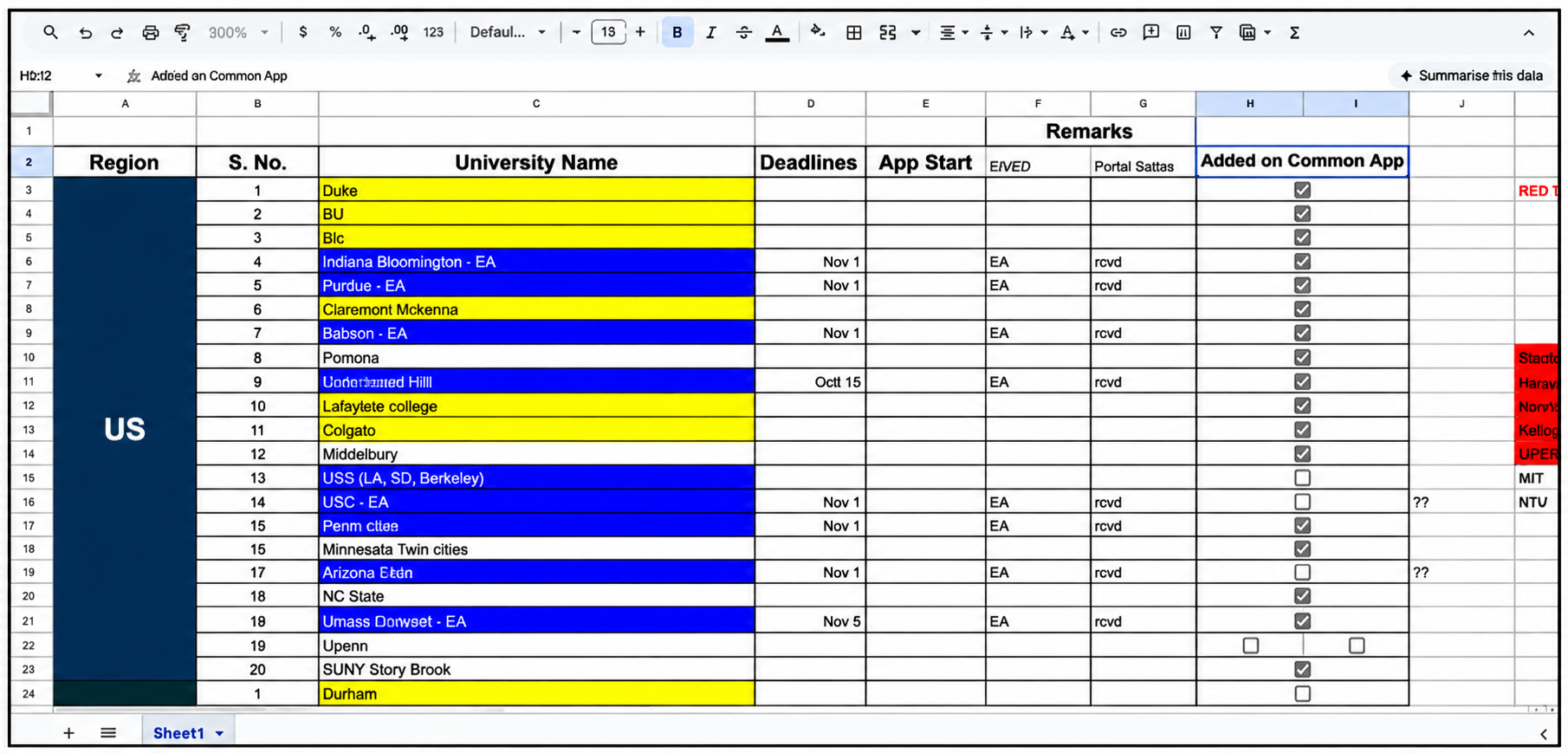
As this database gets built, it shall give you deep insights into what universities would be a good fit. Once you have this database, you may want to reflect on the following questions –
- Which programs fit my interest area?
- Which programs offer great ROI on my investment?
- Which programs shall (potentially) lead to great jobs?
- Which programs leverage skill sets that use my expertise/capability?
- Is this a great university/ program to study in (ranking)?
- Can I get in? What course should I do at university?
As you check each of these parameters against items on your bucket list, you shall have a narrower list of programs that you may wish to apply to. That list will be far more robust than the one arrived at based on ‘rankings of universities’ and gives a true listing of universities that you should apply to.
Choosing a university is not simply about getting into the highest-ranked institution. It is about finding a program that builds on your strengths, challenges you to grow, and prepares you for the career you want. Take time to explore your options, question your choices, and build a shortlist that reflects your ambitions. The right university is not necessarily the most prestigious one, but the one that is right for you.
Check out other blogs for the application process.
Key Takeaways
- Look beyond university rankings: Choose programs based on academic interests, personal strengths, career opportunities, and university reputation.
- Create a university bucket list: List university-course combinations that interest you, even if you are unsure about your admission chances.
- Understand why each program appeals to you: Write a clear reason for selecting every course to identify patterns in your interests and aspirations.
- Evaluate career outcomes and ROI: Compare tuition fees, scholarships, employability, and potential career opportunities before shortlisting universities.
- Build a balanced university shortlist: Consider program suitability, academic quality, affordability, and admission chances to make informed application decisions.
Frequently asked questions
Start by identifying your interests, strengths, and career goals. Compare universities based on course curriculum, academic reputation, career outcomes, affordability, and admission requirements. Choose programs that align with your long-term aspirations.
A university bucket list is a list of university-course combinations you would like to explore. Include your preferred programs and write one reason for each choice. Then compare them based on academic fit, career opportunities, costs, and admission chances.
Consider both, but prioritize the quality and suitability of the specific course. University rankings offer a useful reference, while curriculum, faculty, research opportunities, industry connections, and career outcomes provide a clearer picture of program fit.
Compare the total cost of education, including tuition and living expenses, with potential career outcomes. Consider scholarships, graduate employment rates, expected salaries, and opportunities for professional growth.
Begin with a broad list of programs in the US, UK, Europe, or other preferred destinations. Evaluate each against your interests, academic profile, budget, career goals, and admission requirements. Shortlist universities that offer the strongest overall fit.
Related Blog Posts



Our services
Here is where to go next — learn about our services





The application is yours. The guidance is ours.
UAH’s founders will tell you honestly what you need — even if the answer isn’t us.
A free 30-minute diagnostic call. No commitment.